
Grandpappy Dak in a Wi-Fi World
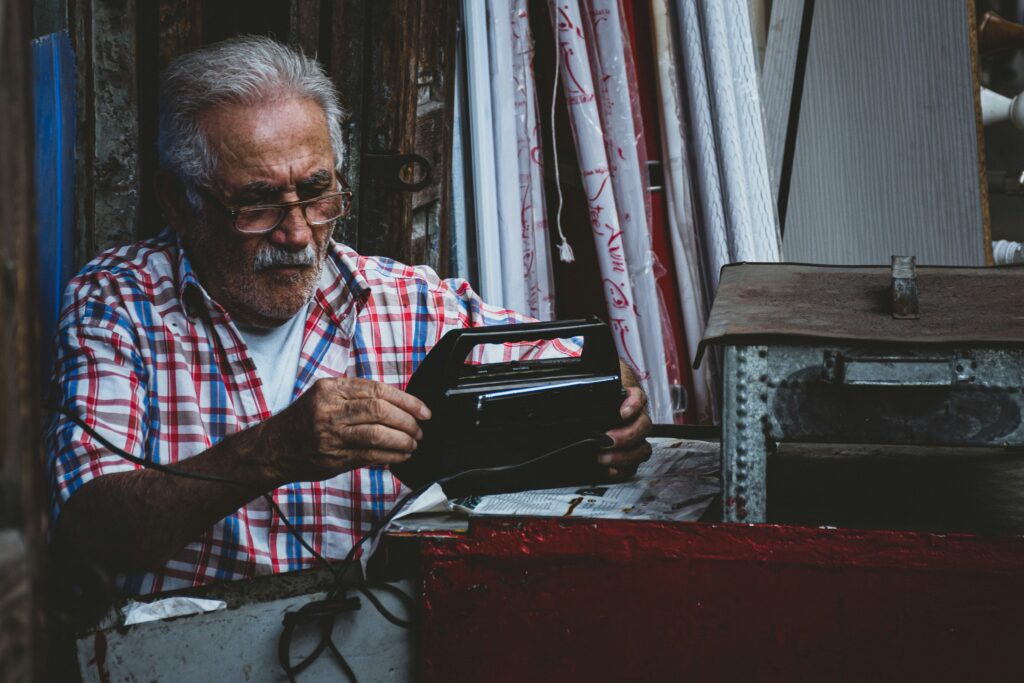
Honestly, I’ve never considered myself much of a tech person. And when I have tech troubles (which is often) I like to claim that “Grandpappy Dak” strikes again, because I most enthusiastically resonate (and sympathize) with grandpas when it comes to technology. Sometimes I actually miss the idea of a simpler time. Sure, electricity and indoor plumbing are great, but I can’t help feeling like cars, computers and the internet kick-started our slippery slope into today’s hyper-digital world, endless screens, constant notifications, social media spirals, AI everything, and somehow… less real human connection. It sounds dramatic, I know, but the bigger and “more connected” the world gets, the farther apart we seem to be. Grandpappy Dak is not thriving in this digital world.
Passwords, Platforms & Road Rage
I’ve always been weary of technology, but going back to school really emphasized that feeling. Wrestling with Microsoft Authenticator, Duo, a thousand passwords, logins, online textbooks and platforms, it’s exhausting, and I truly hate it somedays, it makes me feel like I have tech related road rage! Tech-Rage? Apparently its a real thing. But watching and seeing the impact on students up close is even more unsettling. The rise of “iPad kids,” shrinking attention spans, screen time for days, cyberbullying, the list goes on. It makes me really worried for future students and kids. A simpler time isn’t sounding so bad eh?
Confessions of a Formerly Tech-Free Kid Turned Doom-Scroller
I’m not innocent either though, unfortunately I’m fully addicted to social media. I actually grew up pretty tech-free: we played outside until dinner, Saturday morning cartoons were a treat (and taped, because we didn’t have cable), and we had one landline and one painfully slow family computer. Facebook and Instagram came out when I was 16, and I technically wasn’t allowed to have accounts until grade 12… but of course I made them anyway (sorry, Mom). I didn’t even get a cell phone until I was 18! But now I can’t leave the house without my phone, and I doom scroll. A LOT. Over the years, I’ve tried everything to quit social media, deleting apps, setting screen-time limits, even switching to a flip phone. But now I just end up doom-scrolling on my laptop instead. It’s honestly wild how addictive it all is, and it scares me even more for kids who grow up fully immersed in it. I’m grateful to live somewhere where being outdoors is still a huge part of our culture. Kids still get to be kids here, but I’m aware that’s becoming the exception, not the rule. Don’t get me wrong, I love a good movie night or Netflix binge, and I see that technology has real benefits in classrooms for diverse learners. But I also deeply believe we need more boundaries, tech-free spaces, real limitations, and intentional balance.
When “High Tech High” Wasn’t the Robot Apocalypse I Expected
That’s why “Most Likely to Succeed” really surprised me. With a name like High Tech High, I expected robots roaming the halls and AI teachers at every desk. But it wasn’t like that at all. Their use of technology felt more like hands-on engineering and problem-solving for different subjects. It was actually pretty cool and gave me a few ideas for my own future classroom. What surprised me most, though, was the public backlash against their approach. Instead of “teaching to the test,” the school focused on real-world skills, project-based learning, and student-led inquiry. The results were incredibly creative and innovative projects that actually prepared students for life beyond high school. Sure, they might’ve had less random knowledge memorized across ten different subjects, but they were learning things that mattered, things that helped them succeed in college or find real careers. Meanwhile, public and private schools focused on test prep found that even high-scoring students couldn’t remember the material a month later. And honestly? I relate. I barely remember most of what I learned in high school either. Maybe High Tech High is onto something, maybe real, practical, meaningful learning should matter more than memorizing facts just long enough to repeat them out on an exam. Lots to think about!
Photo by Harrison Mitchell on Unsplash
Photo by Anton Luzhkovsky on Unsplash