Let Them Eat Dirt! The Academic, Physical and Cognitive Benefits of Gardening with Kids
In our increasingly indoor world, it may seem surprising that one of the most powerful learning tools for children might be as simple as a patch of soil, some plants, and a watering can. Yet, the body of research growing around garden-based learning (school or community gardens) suggests that gardening offers children a rich, cross-curricular educational tool. Gardening has proven to provide many social-emotional and physical benefits. In this post I’ll walk through the how and the why gardening helps children learn, why it’s naturally cross curricular and the cognitive and academic benefits. Below I’ve linked a great video to express the big ideas of this post. Let’s dig in!
Why Gardening is so Flippin’ Amazing and Why Every School Should Have a Garden
There are several overlapping theories through which gardening supports children’s learning: cognitive/academic, social-emotional, physical/health, and connection to nature or place-based learning. As an avid (albeit more recent) gardener myself, I can only attest to these benefits and how profoundly gardening has changed my outlook for the better. Today we are discussing the physical health, cognitive and academic benefits of gardening.
Cognitive & Academic Benefits
One of the strongest themes is that garden-based activities offer real, hands-on learning that ties in with traditional curriculum (science, math, literacy) and gives children a reason to investigate, ask questions, predict and observe outcomes. Here are a few things I have discovered on this quest. Gardening is multi-sensory, embodied learning. In a garden, children feel soil, smell freshly watered plants, taste their bounty, and listen to the world around them. Sensory experiences with soil, plants, animals, and weather create tangible learning opportunities which are full of wonder. They can observe growth, measure changes and are encouraged to touch, play and explore. This sensory involvement increases processing and learning retention vs purely abstract instruction. It gets children asking and thinking “Why do plants need sunlight?”, “What happens if I water too much?”, “How do changes to the soil impact plant growth?” “What happens if I plant basil with my tomatoes? You can connect so many cross-curricular ideas that extend far beyond the classroom and into the garden by simply getting kids in the dirt with some seeds, a little bit of compost, water and sunlight.
Inquiry and Real-World Problem Solving
Gardening presents constant challenges (watering, pests, weeds, variable growth) so children naturally engage as investigators and problem-solvers, which supports critical thinking, which in turn helps develop cognitive function. The ability to ask meaningful questions and seek answers is at the heart of gardening. Gardeners naturally engage in scientific inquiry as they observe plant growth, form hypotheses, test ideas, and draw conclusions based on evidence. For example, a gardener might wonder why certain plants attract more pollinators or whether different kinds of compost improves soil quality. By experimenting, perhaps by adding compost to one garden bed and not another, they gather data to support or counter their ideas. The gardening process mirrors some scientific methods of inquiry and helps develop problem solving skills.
Cross-Curricular Connections
For instance, measuring plant growth involves charting or graphing which is all math! (without them really knowing it). Discussing soil types, root systems, drainage or soil nutrients to name a few all involves science. Writing or drawing observations involves literacy and art. You could build creative writing assignments based on sights, sounds, smells and feelings in the garden. Indigenous education can easily become a part of your school culture through a garden. Learning the local Indigenous community’s language names for plants or medicinal herbs, or incorporating local Indigenous Peoples’ gardening principles and Traditional Ecological Knowledges for your school garden are all ways to build connection and community. Garden-based learning builds knowledge from vast multidisciplinary knowledge bases. A single garden offers endless possibilities for learning, connecting science, art, literacy, mathematics, and social studies, all rooted in one tiny piece of earth!
Physical Health & Nutrition
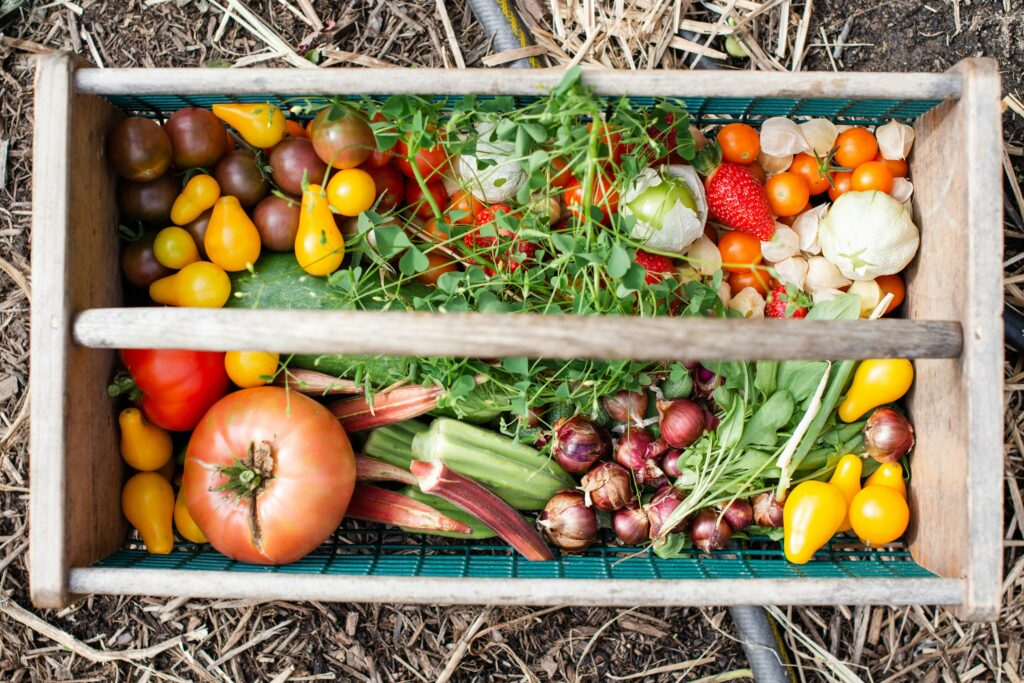
Gardening naturally intersects health and nutrition, which in itself is linked to better learning outcomes and mental well-being (healthy body = healthy brains): Gardening is a workout! It is a full-bodied physical activity, hauling dirt, shoveling compost, weeding, planting, harvesting and even watering are all great forms of physical activity, especially if you are gardening daily. Gardening also naturally creates a platform to talk about health and nutrition with your students. Growing and eating your own food and knowing exactly where it comes from, creates a positive connection to our local food systems. Discussing healthy eating choices (fruits and veggies) can help students begin recognizing that its important on what we fuel our bodies with and how different foods can make us feel, building their health literacy. Plus eating homegrown produce makes it taste better! Store bought tomatoes got nothing on a big juicy garden tomato and that’s a fact (well, a Dakota backed fact, don’t quote me on that). By growing edible plants, children develop familiarity and positive feelings towards fresh produce. This in turn usually helps them eat, or at the very least become more willing to try new vegetables or fruits. School gardens can be a great place to get the message across that eating fresh fruits and vegetables is good for us and it can be really fun too!
In the video below, they discuss how the children who had participated in the garden program, later on helped their parents with making better grocery shop choices and became much more involved in the grocery shopping itself. They were engaged and focused on finding the different fruits and veggies they knew and grew and even wanted to help make the meals they ate. This in turn allowed them to contribute to the building of healthier choices by the bigger connections of food relationships and sharing them with their families (whoohoo). In short, they learned the confidence to make healthier choices.
Why Gardening Matters (and a few limitations)
In many educational settings the move has been toward screen-based, indoor learning. Gardening provides a counterpoint: outdoor, physical, real-world, multi-sensorial learning. It reaches children who may favor hands-on and experiential learning, teaches better health, builds eco-literacy, and can lead to improved academic connections and socio-emotional development. In short, gardening is awesome and helps kids grow, literally and figuratively. But there are certainly a few cautions and limitations to be aware of when creating a school garden. Implementation matters: simply having a garden may not be enough; the instructional design, teacher/parent involvement and integration into learning matters. It takes a lot of time and commitment to make a garden grow which can be found restraining for our very busy teachers and parents, there’s no getting around it gardens can be a lot of work. Different districts or schools have different resources and supports. Funding for tools, seeds or soil, access to land or water for a garden all may be limited in some contexts. Social barriers to implementation like parent or teacher support are all factors that may be impacted in different areas, especially low-income or minority communities.
All together the cognitive, educational and physical benefits strongly point toward gardening being far more than just another outdoor activity for children. It is a wonderful learning environment that is interdisciplinary without even trying. By engaging children in all of the goodness of gardening, we dig into students’ natural curiosity, inquiry, and connection. Personally, I can attest to all of this, as gardening has been one of the most profound learning mentors in my life. And nothing brings me more joy than declaring, I grew this! Look at this sunflower! This whole meal came from my garden! Enjoy this homemade jam from my strawberry patch! Please take as much kale and basil as you physically can I have simply grown too much! So, this is your sign to let them eat dirt (kidding, mostly) Tune in next time for an in-depth post on how gardening promotes social-emotional development and mindfulness in children.
More resources, videos, articles and links:
- Video: Great Gardening: Learning to Grow (PBS) focuses on children of all ages learning life-skills through gardening at school. https://www.pbs.org/video/learning-to-grow-rglg1f/
- PBS Kids article
- https://www.pbs.org/parents/thrive/gardening-with-kids-how-it-affects-your-childs-brain-body-and-soul
- For deeper research: the Cornell “Key Findings” page on garden-based learning. https://gardening.cals.cornell.edu/
- This is an excellent website for resources and research: https://www.childrenandnature.org/
- For research summary: Children & Nature Network’s “Research Digest: Gardening”. https://www.childrenandnature.org/resources/research-digest-gardening-with-and-for-children/
- https://www.youtube.com/watch?v=PGoPtkNFybk
Unsplashed Photography in order of appearance:
Photo by Markus Spiske on Unsplash
Photo by david hughes on Unsplash
Photo by Zoe Richardson on Unsplash
Photo by Andreas Haubold on Unsplash